

Program Overview

The Psychiatric Mental Health Nurse Practitioner program at New England Institute of Technology prepares registered nurses to become advanced practice providers who are equipped to address the growing mental health needs of individuals, families, and communities. Designed for nurses who hold a Bachelor of Science in Nursing (BSN) and an active, unencumbered RN license, this Master of Science in Nursing program combines advanced nursing theory, evidence-based practice, and extensive clinical experiences to prepare graduates for leadership roles in psychiatric and mental health care.

Mental health care is one of the fastest-growing and most critical areas of healthcare today. Psychiatric NPs play an essential role in assessing, diagnosing, treating, and managing psychiatric and behavioral health conditions across the lifespan. Graduates of this program develop the expertise needed to provide comprehensive mental health services in hospitals, community agencies, private practices, outpatient clinics, integrated healthcare systems, and telehealth settings.

The curriculum includes advanced graduate nursing coursework, preparation in the “Three Ps” of advanced practice nursing (Advanced Pathophysiology, Advanced Physical Assessment, and Advanced Pharmacology), and specialized psychiatric mental health education focused on psychotherapy, psychopharmacology, psychiatric assessment, diagnosis, and evidence-based treatment across diverse populations.

Upon successful completion of the program, graduates are eligible to sit for national Psychiatric Mental Health Nurse Practitioner certification examinations through the American Nurses Credentialing Center (ANCC), subject to certification requirements.

Key Dates & Application Information

  • Apply & Key Dates
    • Applications for the program are now open. Apply here!
    • The program always starts in the Winter Term.
    • New England Institute of Technology runs on a rolling admissions basis, but we suggest applying as early as possible to secure your spot in the appropriate start term.
  • Request More Information

    We understand that applying to graduate school can seem daunting. Our admissions team is here to help you at each step of the admissions journey.

    • Complete an inquiry form! Select “Psychiatric Mental Health Nurse Practitioner, MS” under Academic Interest.
    • Questions about the program, requirements, or cost? Email Admissions Officer Michael Caruso at [email protected] to receive important updates and get any questions answered!
  • Financial Aid

    Wondering about options for funding your graduate nursing degree? We provide comprehensive financial aid and work with you to find solutions that meet your needs. NEIT offers financial aid such as non-repayable grants, scholarships, traditional student loans, and tuition payment plans.

    Discover more about funding your education at NEIT.


Flexible Hybrid Learning

This program is delivered primarily online, allowing students to balance work, family, and educational commitments. Coursework is supported through NEIT’s learning management platform and is complemented by limited in-person clinical immersion experiences and supervised clinical practica.

Clinical Immersion Experience

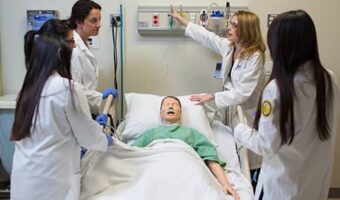
Students participate in a dedicated Clinical Immersion course designed to strengthen advanced practice skills through hands-on experiences, assessment techniques, diagnostic procedures, and clinical decision-making. The immersion experience includes on-campus sessions held in East Greenwich, Rhode Island.

Extensive Clinical Preparation

Students complete 780 clinical clock hours, including:

  • Clinical Immersion
  • Psychiatric Assessment and Differential Diagnosis
  • Adult Psychiatric Mental Health
  • Geriatric Psychiatric Mental Health
  • Child and Adolescent Psychiatric Mental Health
  • Special Populations Experiences

These supervised clinical experiences help students develop competence in delivering psychiatric and mental health care across varied patient populations and healthcare environments.

Top-Notch Facilities:

One of the core values of the College of Health Sciences is to provide modern and inclusive programs that prepare healthcare professionals who are skilled in critical thinking and equipped with the technological skills needed in the healthcare industry. We achieve this by giving students access to cutting-edge technology at NEIT, allowing them to refine their skills using the latest innovative equipment.

Industry-Expert Faculty:

Our nursing faculty remain committed to providing an enriching and supportive learning environment, ensuring students receive the highest-quality education. They bring a wealth of clinical expertise and academic knowledge to the program and focus on evidence-based practice and hands-on learning, preparing students for success in the dynamic field of healthcare. Meet our faculty.


Frequently Asked Questions

  • What are the entry requirements for the program?

    A candidate for admission to the program must meet the following criteria:

    1. Applicants for admission must have a bachelors degree in Nursing from an accredited nursing program with an overall minimum undergraduate GPA of 3.0
    2. Complete an information session with a university admissions officer.
    3. Apply for enrollment including a personal statement and a current professional résumé or curriculum vitae along with the application
    4. Applications may be completed online at www.neit.edu.
    5. Submit an official transcript showing degrees completed. Completed nursing programs must be accredited from: NLN, ACEN, CCNE or NLNCC accredited institutions.
    6. Provide a certificate, signed by a physician/provider, confirming immunization against measles, mumps, rubella, and varicella, receive a booster dose of tetanus and diphtheria (Tdap) within the last ten years, and 3 doses of Hepatitis B vaccine or a positive titer (Other requirements may be determined by the clinical organizations)
    7. Proof of a valid, unencumbered RN license from any state in the United States or U.S. territory must be submitted prior to admission.
    8. Provide evidence of a current American Heart Association (AH) BLS for Healthcare Providers card.
  • Is the program entirely online?

    The courses are offered mainly online; however, some of the courses require hybrid sessions. The clinical practicum courses and clinical immersion weekend(s) require hands-on training in the classroom/simulation laboratories with an instructor or clinical provider. Students must complete 750 direct patient care clinical hours in the program to complete the program and be eligible to sit for certification (please refer to the Student Nurse Guidelines for further explanation regarding clinical hours).

  • How long does it take to complete the program?

    The program is designed to be completed in 8 terms, with each term lasting approximately 10 weeks.

  • How many clinical hours are required?

    Students complete 780 clinical clock hours, including practicum experiences and clinical immersion activities.

  • Can I complete the Practicums at my current workplace?

    Yes, the Practicum hours may be completed in the student’s own workplace; however, the student may not be working or being paid during practicum hours. The preceptor for the program must have at least two years of experience as an advanced practice licensed provider, one year of which must be in the area of clinical/practicum specialty and have a minimum of a master’s degree in nursing, and an advanced degree prepared as a nurse practitioner. Physician assistants and medical doctors may also serve as a preceptor for nurse practitioner students (depending on state guidelines).

    All preceptors MUST be approved by the MSN Program Coordinator. Additional guidelines and individualized support are provided to all matriculated students and may be found in the Student Nurse Guidelines and Preceptor Manual.

  • Will NEIT help me find clinical placements and preceptors?

    It is highly recommended that students begin identifying and speaking with potential preceptors immediately upon entering the MSN program. Practicum affiliation agreements can also take a considerable amount of time to get approved.

    For those students who are unable to secure appropriate preceptors, the Department of Nursing, along with the MSN/PMHNP Program Coordinator and the Nursing Academic Fieldwork Coordinator (AFC) will facilitate this process and assist as needed, helping to ensure that all students are able to obtain clinical practicum sites that meet the curriculum guidelines and program goals. It is the responsibility of the student to discuss their needs with the faculty.

  • Is the NEIT Nursing Program Accredited?

    The master’s nursing program at New England Institute of Technology located in East Greenwich, Rhode Island is accredited by the: Accreditation Commission for Education in Nursing (ACEN), 3390 Peachtree Road NE, Suite 1400 Atlanta, GA 30326 (404) 975-5000.

    The most recent accreditation decision made by the ACEN Board of Commissioners for the master’s nursing program is Initial Accreditation.

    View the public information disclosed by the ACEN regarding this program at https://www.acenursing.org/acen-programs/new-england-institute-of-technology-7d5ae


  • Is licensure required to practice as a Nurse Practitioner?

    Yes. The program is designed to prepare registered nurses with an active, unencumbered RN license for national PMHNP certification examinations. Graduates may be eligible to apply for certification and advanced practice licensure, subject to the requirements of their state licensing board.

    Because licensure requirements vary by state and may change over time, students are strongly encouraged to review the requirements of the state where they intend to practice before enrolling. Successful completion of the program does not guarantee certification, licensure, or authorization to practice in any specific state.

    Important: State boards of nursing may have additional requirements, and certain legal or disciplinary histories may affect eligibility for certification or licensure. Students are responsible for verifying all applicable requirements with their state’s licensing agency.

  • Are advisors and student support services available?

    Yes, each student is assigned a Student Success Coordinator who provides guidance throughout the program.
Related Programs

Program Mission, Goals, and Outcomes

Mission Statement

The New England Institute of Technology Nursing Department seeks to prepare nurses at the certificate, associate, bachelor, and master levels to practice holistically in today’s complex and highly technological healthcare system. The mission of the program is to prepare individuals as professionals whose care reflects altruistic, evidence-based, and ethical practice in the nursing profession.

Program Philosophy


This philosophy, foundation of our curriculum, represents the faculty’s core beliefs regarding human beings, environment, health, nursing, higher education, teaching, and learning. We believe that every person is a unique being worthy of respect and dignity. In our nursing framework, biological and social components integrate seamlessly in individuals who use self-care to maintain their health status. We view the environment as the totality of the patient’s experience that includes the family, cultural context, society, and the global community. We recognize that the patient’s environment is a major influence on the patient’s health status. Health is an individual experience characterized by wholeness where physical, psychological, interpersonal, spiritual, cultural, and social aspects are inseparable in the person. An individual’s response to stressors may change the ability of the patient to engage in self-care, resulting in deficits in meeting basic needs and requiring the need for nursing care. Individuals are moving toward maturation and actualization of their full potential. Humans have universal self-care requisites and nurses need to be tireless advocates for the patients’ pursuit of these universal needs within a caring and nonjudgmental environment.

Nursing is a scientific discipline with a distinct body of knowledge. Nursing practice is grounded in nursing science, natural sciences, social sciences, technology and humanities. Nurses engage with patients in an active partnership and seek to understand the patient’s lived experience of illness. Within this context, nurses provide holistic evidence-based nursing care that respects and supports individual definitions of health. Nurses focus on quality healthcare and advocate for diverse individuals, families, communities, and systems. Nursing practice is grounded in these paradigmatic beliefs which provide the foundation for critical inquiry and knowledge development in nursing.

Every person who wishes to pursue a career in nursing should have the opportunity to do so. By advancing educational access for a diverse population of students, nursing education contributes to a diverse nursing workforce to meet the healthcare needs of culturally and ethnically diverse populations. Likewise, every nurse should be encouraged to pursue and have access to seamless academic progression in nursing education. The Department of Nursing at New England Tech joins with other nursing organizations in Rhode Island and throughout the nation, to advance opportunities for academic progression within nursing. We stand ready to work together to ensure that nurses have the support they need to further their education. Higher education for nursing practice is grounded in a sound theoretical and empirical knowledge base. The intent of the educational program is to address the needs of diverse learners by encouraging active participation in the learning process. Nursing education seeks to empower students as future nurses while instilling an enthusiasm for lifelong critical inquiry, learning, and professional growth. The faculty is committed to creating supportive environments that foster adult learning. Students have multiple opportunities to develop the core competencies that characterize a well-educated nurse.

Students work closely with professors who care about them and provide opportunities for student learning and development as confident lifelong learners. The faculty use a variety of evidence-based teaching methods that address adult students’ learning needs. Learners assume responsibility for their learning and are active participants in the learning process.

Faculty reviewed and updated May 2025

End-of-Program Student Learning Outcomes

  1. Engage as a leader and change agent in response to the health promotion, disease prevention/management, and educational needs of the evolving healthcare system and community partners.
  2. Implement quality and safety measures through ethical, legal, and professional standards and role-specific competencies to address the needs of underserved and culturally diverse populations.
  3. Integrate advanced knowledge of health care and healthcare education through related disciplines in the roles of the master’s-prepared nurse.
  4. Apply evidence-based practice (EBP) research in the areas of clinical practice, professional development, higher education, or administrative settings to improve outcomes.
  5. Utilize the process of scientific inquiry to validate and refine knowledge relevant to improving outcomes within a dynamic healthcare environment.
  6. Integrate technologies in the role of the master’s prepared nurse, demonstrating information literacy in a variety of settings.
  7. Evaluate healthcare organizational systems in decision-making, including cost-effective initiatives, ethics, policy development, and quality and safety measures.
  8. Integrate principles of ethical decision-making and clinical judgment as it applies to the various roles of the master’s prepared nurse.

ACCREDITATION STATUS

The master’s nursing program at New England Institute of Technology, located in East Greenwich, Rhode Island, is accredited by the Accreditation Commission for Education in Nursing (ACEN), 3390 Peachtree Road NE, Suite 1400, Atlanta, GA 30326 (404) 975-5000.

The most recent accreditation decision made by the ACEN Board of Commissioners for the master’s nursing program is Initial Accreditation.

View the public information disclosed by the ACEN regarding this program here.


Program Outcomes

TBD


Statement Regarding Licensure
In accordance with the 2019 Reauthorization of the Higher Education Act, New England Institute of Technology hereby discloses only that the curriculum for this program meets the educational requirements for licensure as RNs and APRNs in the State of Rhode Island. The applicable licensing board in Rhode Island may impose additional requirements on candidates prior to granting a license; we encourage you to investigate those requirements. NEIT has not determined whether the curriculum for this program meets the educational requirements for licensure in any other states or territories and we encourage you to investigate the requirements in your state or territory prior to accepting an offer of admission at NEIT.


NEIT Course Catalog

NEIT is proud to offer a modern, practical, immersive curriculum for our unique degree programs. Our career-focused education brings learning to life.

View the latest courses offered!


Curriculum

Psychiatric Mental Health Nurse Practitioner Program

Term I

  • NUR 500 Theoretical Foundations for Nursing Practice
  • NUR 505 Advanced Pathophysiology

Term II

  • NUR 515 Pharmacology for Advanced Practice Nurses
  • NUR 525 Research for Advanced Practice

Term III

  • NUR 520 Advanced Physical Assessment
  • NUR 530 Public Health for Advanced Clinical Practice
  • NUR 555 Clinical Immersion (30 clinical hours)

Term IV

  • NUR 540 Psychotherapy and Therapeutic Modalities
  • NUR 545 Advanced Psychopharmacology for PMHNP

Term V

  • NUR 602 Psychiatric Assessment and Differential Diagnosis
  • NUR 603 Psychiatric Assessment and Differential Diagnosis Clinical (188 clinical hours)

Term VI

  • NUR 608 Adult Psychiatric Mental Health
  • NUR 609 Adult Psychiatric Mental Health Clinical (188 clinical hours)

Term VII

  • NUR 612 Psychiatric Mental Health Nursing and the Older Adult
  • NUR 613 Psychiatric Mental Health Nursing and the Older Adult Clinical (188 clinical hours)

Term VII

  • NUR 618 Child, Adolescent, and Special Populations Psychiatric Mental Health
  • NUR 619 Child, Adolescent, and Special Populations Psychiatric Mental Health Clinical (186 clinical hours)

Total Quarter Credit Hours = 66
Total Clinical Clock Hours = 780

Q&A and Technical Standards

Questions & Answers

  1. When do classes meet?
    The majority of the PMHNP program is online, so for many courses there are no specific times when students are required to meet in a traditional classroom format. Faculty may schedule, at their discretion, online discussion or other activities through the online learning platform that may require students to be online at a specific time, but these instances are not regular. Because the AS – MSN/PMHNP program is hybrid, there is one course (NUR 555 Clinical Immersion) that has a live clinical component when students are required to meet in a traditional on-campus classroom (1-2 weekends Friday-Sunday). Students will be notified well in advance of the date and time for the clinical immersion weekend(s). Faculty may schedule (at their discretion) online discussions or other activities through the online learning software that may require you to attend class at a specific time (example Zoom/ADOBE for class).
  2. Must I take other courses in addition to the Nursing courses?
    No. All courses within the MSN program are nursing courses.
  3. How large will my classes be?
    The average size for a class is about 15 students; however, larger and smaller classes occur from time to time.
  4. How is taking an online course different from an on-campus course?
    Online courses offer you flexibility in the scheduling of your class and study time. However, online courses also require self-discipline and self-motivation to do the work that is expected of the course. Despite this flexibility, you are required to log in to your course regularly as described in the course syllabus. There are required weekly assignments with specific due dates (see course syllabus).
  5. Do online courses take more time than on-campus courses?
    Online courses require the same amount of work as an on-campus course. However, the time you spend in an online course will be different than in a traditional on-campus course. For example, less time will be spent on driving to and from campus and limited time that will be spent on campus during clinical/skills immersion.
  6. What are the entry requirements for the program? 
    • A candidate for admission to the PMHNP program must meet the following criteria:
    • Applicants for admission must have a bachelors degree in Nursing from an accredited nursing program with an overall minimum undergraduate GPA of 3.0
    • Complete an information session with a university admissions officer.
    • Apply for enrollment including a personal statement and a current professional résumé or curriculum vitae along with the application. Applications may be completed online at www.neit.edu.
    • Submit an official transcript showing degrees completed. Completed nursing programs must be accredited from: NLN, ACEN, CCNE or NLNCC accredited institutions.
    • Provide a certificate, signed by a physician/provider, confirming immunization against measles, mumps, rubella, and varicella, receive a booster dose of tetanus and diphtheria (Tdap) within the last ten years, and 3 doses of Hepatitis B vaccine or a positive titer (Other requirements may be determined by the clinical organizations).
    • Proof of a valid, unencumbered RN license from any state in the United States or U.S. territory must be submitted prior to admission.
    • Provide evidence of a current American Heart Association (AH) BLS for Healthcare Providers card.
  7. How long should it take me to complete my program?
    Students must follow the stated program curriculum. The PMHNP program is 8 terms, with 10 weeks each term). Students who are not enrolled during one or more terms or who are not successful in a course may find that the course/s they need may not be available every term and they will have to wait until the course is offered again. Students should check with their Academic Advisor for further details.
  8. Is The New England Institute of Technology accredited?
    Yes. New England Tech is institutionally accredited by the New England Commission of Higher Education. Accreditation by NECHE is recognized by the federal government and entitles New England Tech to participate in federal financial aid programs.
  9. Is the NEIT Nursing Program Accredited?

    The master’s nursing program at New England Institute of Technology, located in East Greenwich, Rhode Island, is accredited by the Accreditation Commission for Education in Nursing (ACEN), 3390 Peachtree Road NE, Suite 1400, Atlanta, GA 30326, 404-975-5000.

    The most recent accreditation decision made by the ACEN Board of Commissioners for the master’s nursing program is Initial Accreditation.

    View the public information disclosed by the ACEN regarding this program here.

  10. Is the program entirely online?
    The courses are offered mainly online however some of the courses require hybrid sessions. The clinical practicum courses and clinical immersion weekend(s) require hands-on training in the classroom/simulation laboratories with an instructor or clinical provider. Students must complete 750 direct patient care clinical hours in the PMHNP program to complete the program and be eligible to sit for certification (please refer to the Student Nurse Guidelines for further explanation regarding clinical hours).
  11. What do the PMHNP Practicums involve?
    The objective of the PMHNP Practicums is to collaborate with and learn from the preceptors and experts while implementing evidence-based care and treatment modalities for the patient community. The student and preceptors will enter into a contractual agreement that further defines the objectives of the practicum preceptorship-based on the students’ learning needs and professional goals.
  12. Can I complete the PMHNP Practicums at my current workplace?
    Yes, the PMHNP Practicum hours may be completed in the student’s own workplace; however, the student may not be working or being paid during practicum hours. The preceptor for the PMHNP program must have at least two years of experience as an advanced practice licensed provider, one year of which must be in the area of clinical/practicum specialty and have a minimum of a master’s degree in nursing, and an advanced degree prepared as a nurse practitioner. Physician assistants and medical doctors may also serve as a preceptor for nurse practitioner students (depending on state guidelines).All preceptors MUST be approved by the MSN Program Coordinator. Additional guidelines and individualized support are provided to all matriculated students and may be found in the Student Nurse Guidelines and Preceptor Manual.
  13. When should I begin looking for a preceptor for the PMHNP Practicums?
    It is never too early to begin thinking about potential advanced practice provider preceptors. It is highly recommended that students begin identifying and speaking with potential preceptors immediately upon entering the MSN program. Practicum affiliation agreements can also take a considerable amount of time to get approved.All graduate students are encouraged to secure Practicum/Clinical placements and preceptors in quality healthcare agencies or practices as soon as they enter the program. For those students that are unable to secure appropriate preceptors, the Department of Nursing, along with the MSN/PMHNP Program Coordinator and the Nursing Academic Fieldwork Coordinator (AFC) will facilitate this process and assist as needed, helping to ensure that all students are able to obtain clinical practicum sites that meet the curriculum guidelines and program goals. It is the responsibility of the student to discuss their needs with the faculty.
  14. When should I begin obtaining and submitting documentation for my PMHNP Practicums?
    It is important that you start obtaining compliance documents at least two to three full terms before you plan to begin or immediately upon entering the MSN program for PMHNP Practicums. All compliance documents must be submitted at least one full term before you register for the PMHNP Practicums. All PMHNP Practicums documents are located in the MSN Student Nurse Guidelines on students.neit.edu.
  15. What documentation is required for the PMHNP Practicums?
    The following compliance documents must be on file in the Department of Nursing one full term before registering for the PMHNP Practicums (the Academic Fieldwork Coordinator is available to answer questions and assist students as needed):
    • Current American Heart Association CPR certification for Healthcare providers at the infant, child, and adult levels.
    • Capstone/Practicum Contract (if required)
    • Preceptor’s current resume or curriculum vitae, completed NEIT Nursing Preceptor Agreement form, and copy of Certificate of Malpractice Insurance.
    • Certain practicum sites may have additional requirements. Students are responsible for consulting with their preceptor to see if there are any other requirements.
    • Advanced Nurse Practice, Physician Assistants, and Medical Doctors must have an active unencumbered license. For example, if a student in the State of CT wants to do clinicals in the State of RI, the student and preceptor must be licensed in the State of RI.
  16. Can I transfer the credits that I earn at New England Tech to another college?
    The transferability of course credit is always up to the institution to which the student is transferring. Students interested in the transferability of their credits should contact the Office of Teaching and Learning for further information.
  17. Do I need to maintain a certain grade point average?
    The graduate student must maintain a 3.0 cumulative grade point average (GPA) to remain in good standing with the university. A minimum grade of B (83%) is required for all courses taken to complete the MSN core courses. Students may repeat a course only once; If a minimum grade of B (83%) is not obtained a second time, the student will be subject to dismissal from the nursing program. A student who does not earn at least a B (83%) or a Pass (P) in any two courses throughout the program will be subject to dismissal from the nursing program.If students earn below a B in any of their courses prior to the MSN content, they will need to repeat the course and can join the next cohort moving through the program. If this occurs more than once and the student is dismissed from the AS-MSN program, they do have the option to transfer into the RN-BSN program to complete their coursework and earn their BSN, for which a minimum grade of B- is acceptable. After RN-BSN program completion, they can apply to enter the MSN program through the traditional route.
  18. Can I transfer credits earned at another college to New England Tech?
    Transfer credit for appropriate master’s level courses taken at an accredited institution will be considered for courses in which the student has earned a “B” or above. An official transcript from the other institution must be received at a minimum of one week prior to the start of the course for which transfer credit is being requested.
  19. Is there a clinical practicum/capstone requirement?
    Yes. To be eligible for graduation from New England Tech with an MSN degree, students must complete the clinical practicum/capstone courses and their respective hours as matriculated students in the MSN program at New England Tech.
  20. Will advisors be available to me?
    Yes. Each student in the MSN program will be assigned a Student Success Coordinator. The NEIT Student Success Coordinator provides guidance, encouragement and support to students and is the primary point of contact for all student concerns and information about NEIT policies and procedures. From the individual student’s perspective, the NEIT Student Success Coordinator is the student’s college-wide advisor on all matters related to success at NEIT. Student Success Coordinators assist students who are experiencing difficulties with their course work or who encounter problems that interfere with the successful completion of their program. Student Success Coordinators monitor students’ attendance and academic progress and contact students as needed. The Student Success Coordinators will have regular outreach to the students through email and phone. Students may meet with their Student Success Coordinator for a degree audit and for assistance with course selection and registration. Students with disabilities who wish to request accommodations must self-identify, communicate their needs to their Student Success Coordinator and provide current and comprehensive documentation concerning the nature and extent of their disability.
  21. How many credits do I need to acquire my Financial Aid?
    Students entering the program will be eligible for various forms of financial aid, including loans, if they take at least 4 credits per term.
  22. What does my program cost?
    The cost of your program will be as outlined in your enrollment agreement, along with your cost for books and other course materials. (See current Tuition and Fees for the MSN program)
  23. What kind of employment assistance does New England Tech offer?
    The Office of Career Services assists New England Tech students and graduates at the East Greenwich, RI campus and online in resume writing, interviewing skills, and the development of a job search strategy. Upon completion of their program, students may submit a resume to be circulated to employers for employment opportunities that, for the most part, may exist in Rhode Island, Massachusetts and Connecticut. Employers regularly contact the Office of Career Services about our graduates. In addition, our Office of Career Services contacts employers to develop job leads. A strong relationship with employers exists as a result of New England Tech’s training students to meet the needs of industry. No school can, and New England Tech does not, guarantee to its graduates employment or a specific starting salary.
  24. Where will job opportunities exist?
    Employment opportunities are available nationally. Our graduates have obtained employment in many different healthcare and educational settings across the region and the country.
  25. What are the hardware and software requirements for the program?
    Recommended Minimum
    Operating System: Windows 10 or Macintosh OS X (10.14)
    Processor: 2+ GHz
    Memory: 4GB
    Plug-ins: Adobe PDF Reader, Flash, and others as required by specific courses
    Players: QuickTime, Java Player, Java
    Browser: Chrome, IE, Safari, Edge, Firefox (all latest versions)
    Display: 1024×768
    Software: Office 365 (2016)
    Internet Connection: FiOS/DSL/CABLE DSL/CABLE
    Email Account: New England Tech student email account
    Sound Card: Required
    Other (some programs): • A webcam (the one built into your laptop or iPad should be fine)

    • A microphone (built into the computer or headset is handy).

    • A digital camera (the one on a smartphone is fine).

    Online students must be capable of installing and maintaining their own computer’s hardware and software. New England Tech does not assist students with the setup of their computers. Information about obtaining the software (if any) will be made available to you at the start of each course.

    Note: Tablets and smartphones can be convenient for reading course materials and email but will not be sufficient for doing all of your course work.

  26. Do I need special computer skills in order to take an online course?
    You will need basic familiarity with your computer, for example: emailing, using the Web, and downloading and attaching documents. No special equipment is required – just a modern Windows or Mac computer (see specifications above), an office suite such as Microsoft Office, and a broadband internet connection.New England Tech online courses are designed to help acclimate you to the technology and build your skills and your confidence as you go. We provide 24×7 support via phone, email or chat to help you with computer or online system issues. Tablet computers can be useful for doing course readings, watching course videos, and catching up on course discussions. But a tablet will not be sufficient for doing all your course work – be sure you have regular access to a laptop or desktop computer.
  27. How can I get help for my coursework when I need it?
    There are several ways that you can get the help you need with your coursework. First, your instructor will be available to you through email, chat, and the phone; second, your Student Advisor is also available through email, chat, and the phone; and finally, the Academic Skills Center will be available via email and the phone. PLEASE NOTE: It is important for both your personal and professional growth that you do all the work yourself. New England Tech has a strict Academic Honesty Policy that is part of every course syllabus.
  28. How do I get help from other university departments?
    At the beginning of each term, you will receive a list of contact information for every university service. The list includes where you can find each service, such as the university catalog and URL, the name and contact information for the individual responsible for each service, such as the telephone number and email address, and the hours when each service is available. Examples of services include the Academic Skills Center, the Bookstore, the Career Services Office, the Financial Aid Office, the Registrar’s Office, Student Advisors from the Office of Student Support Services, the Library, Student Accounts, the Office of Teaching and Learning, and the Response Desk.
  29. How much time should I expect to dedicate to an online course?
    New England Tech’s policy regarding the amount of work expected of a student is similar to all other colleges and universities. The number of credit hours assigned to coursework is related to the academic time a student is expected to spend in direct faculty instruction and out-of-class work, and reasonably approximates one hour of classroom or direct faculty instruction and a minimum of two hours of out-of- class student work each week for approximately ten weeks for one hour of credit; or at least an equivalent amount of work for other academic activities as established by New England Tech including laboratory work, internships, practicums, studio work, and other academic work, such as study and exam preparation time, leading to the award of credit hours. We have found that in the MSN PMHNP program, students have been successful when dedicating 20-30 hours per week to studying course materials. This may vary, more or less, per individual student and their past experiences.
  30. Where do I go for help with technical issues?
    The Response Desk is available through email and phone. Please realize the Response Desk can only help you with access to your online account. The Response Desk cannot help you with any software or hardware issues with your personal computer. Refer to the Office Hours document that is available in each of your Canvas courses for specific contact information as well as hours of operation.
  31. How do I buy textbooks?
    Students may purchase their textbooks either through the Bookstore or through online merchants. Your instructor will provide the course syllabus to you prior to the start of class to allow you time to purchase the textbooks. Textbook information for all courses is available through the Bookstore prior to the start of the course. Please review the contact information for the Bookstore in the Office Hours document.
  32. Are there attendance and participation requirements?
    Yes. Each week, you will be required to participate in required activities such as discussion boards or other assignments for each course. All course activities will be counted towards your attendance and participation grade.
  33. How will I submit my course assignments and take exams?
    You will receive information from your instructor about how to submit your assignments through the Canvas learning management system. You may be asked to take online or web-based quizzes and exams, submit papers online, engage in group work, or prepare a portfolio of your work online. Your instructor will notify you in advance of his or her testing requirements. In some cases, your instructor may require that you take a proctored exam. If a proctored exam is required, you may be required to submit a proctor form to your instructor prior to gaining access to the exam. Respondus LockDown Browser may also be utilized for course exams or quizzes.
  34. Will I have an instructor?
    Yes. Instructors are essential to online learning at New England Institute of Technology. All instructors are trained to teach online or have experience teaching online. They lead the courses and function as facilitators, coaches and tutors. In the online setting, instructors devote as much time to communicating with the class as they do in the traditional classroom. They log in regularly to respond to questions, direct discussion and evaluate assignments. Full-time instructors for all NUR courses have doctoral degrees.
  35. Will I interact with other students?
    Yes. You will interact with other students in all your online courses. Through online discussions, email and other group activities, you can develop an electronic peer network and participate in discussion forums and online study groups. Although you may never see each other face-to-face, you will establish a group of colleagues.
  36. Are there any additional costs/activities associated with this program?
    All students must have a complete physical examination and required immunizations completed prior to clinical practicum/capstone. Mumps, Measles, Rubella, Hepatitis B, Varicella immunization or titers, and tetanus immunizations are required. TB testing is required each year. Personal negligence and malpractice insurance is also required by affiliating facilities where internships are scheduled. MSN PMHNP students will be required to obtain malpractice insurance via www.nso.com. Students will apply as a Student: Nurse Practitioner: Family Practice. Uniforms (lab coat and student ID), equipment, laboratory fees and textbooks will also need to be purchased. See question # 37 below for additional fees/costs.Students are required to purchase or have access to an otoscope/ophthalmoscope set, reflex hammer, and a pocket Snellen chart (differs from a regular Snellen chart). Students are also required to have a stethoscope with a diaphragm and bell. All these items will be used to practice components of the head-to-toe physical exam during the NUR520 course as well as during the Clinical Immersion weekend and for your Practicum courses. All items should also be clearly labeled with the student’s name. The cost of these items varies widely, and no particular brand or quality is required. (A Welch-Allyn set is not required – a student set will suffice). These items can be obtained via online vendors or you may be able to borrow them from a friend or colleague, however, you will need them for your Practicum/Clinical courses. Students are also required to pay for and set up an account with Exxat https://steps.exxat.com for the management of their student health records. This is an annual fee while the student attends NEIT.
  37. Is the COVID-19 vaccination required for the MSN program?
    The Nursing Program clinical affiliates have different COVID-19 vaccination requirements than the university’s requirements. The clinical affiliates have a responsibility to their employees and patients to minimize the risk of exposure to the COVID-19 virus. Therefore, all clinical affiliates require all nursing students to provide proof that they have received the COVID-19 vaccination along with at least one booster. If a student chooses not to be vaccinated the Nursing program will not be able to guarantee clinical practicum placement. This will prevent the student from completing the program. Clinical sites may have exemptions for their employees; however, most clinical sites do not accept exemptions from students as they are guests at their facility.If a clinical site has exemption requirements it is the student’s responsibility to submit any required documents and follow the clinical affiliate’s COVID-19 protocol. It is up to the clinical facility to grant or deny the exemption based on the documentation provided by the student. The university has no control over policies mandated by the clinical affiliates. Students may not know if their exemption is approved by a clinical site prior to the start of a term.If an exemption is granted, individuals may also be asked to complete regular COVID-19 testing, often on a weekly basis. Additional PPE protocols may also be required. The student will assume responsibility for any additional costs associated with the exemption protocols. Students may not be able to complete all of the clinical requirements at one clinical site. If a student needs to be assigned more than one clinical site, the student will need to apply for an exemption at each clinical site they are assigned to. The failure to comply with the clinical affiliate’s policies with regard to vaccination and/or exemption requirements will result in being dismissed from the Nursing program. In the event the exemption is denied, the Nursing student will be unable to complete the Nursing program.
  38. Where can I purchase a uniform, and what kind of uniform do I need?
    Students may purchase items for their uniforms online at Alexander’s Uniforms at https://alexandersuniforms.com. All items are priced to include a 20% discount on lab coats only. To obtain the discount or if you have any questions, contact Wendy Magnette via email at [email protected] or at 401-654-6500.

    The required uniforms for male students include:
    Lab Coat; White Meta 739 with patch XS-5X (call or email for current pricing)
    1 Magnetic ID/Name Pin D23 $15 ea. (or regular pin for $11)


    The required uniforms for female students include:
    Lab Coat; White Meta 738 with patch XS-5X (call or email for current pricing)
    1 Magnetic ID/Name Pin D23 $15 ea. (or regular pin for $11)

    You may also purchase your uniform items at https://alexandersuniforms.com or at Alexander’s Uniforms at one of their three locations (recommended if you are unsure of the size): 1) Rhode Island: Marshall’s Plaza, 1 Lambert Lind Highway, Warwick RI 02886, 860-889-7744, 401-654-6500; 2) Connecticut: 77 Salem Turnpike, Norwich, CT 06360, 781-762-1449; 3) Massachusetts: 500 Providence Highway, Norwood MA 02062.

  39. Do I need to have a Criminal Background check or other specific compliance training?
    Yes. All MSN students are required to have a state/federal criminal background check prior to the PMHNP Practicums. Students will also need to complete additional compliance training outlined in your Exxat profile. Additional trainings may be required by the institution where clinical practicums take place when those are arranged.
  40. Is licensure required to practice as a Nurse Practitioner?
    Yes. All states require licensure and certification in order to practice. The NEIT MSN/PMHNP program is designed to prepare graduates with an active, unencumbered registered nurse (RN) license to sit for the PMHNP board certification exam (AANP/ANCC). Each state has its own requirements for practicing as a nurse practitioner, that are overseen by a state Board of Nursing or agency. Because individual state requirements are subject to change, NEIT provides all of the web links to each state board of nursing to evaluate the requirements for nurse practitioners on the Nursing Department MSN website. It is strongly recommended that students planning to enter the NEIT PMHNP program consult the appropriate Board of Nursing or state agency in the state in which he or she wishes to practice, thus determining specific requirements for state licensure. It is each individual’s responsibility to understand, evaluate, and comply with all requirements relating to the practice as a nurse practitioner. NEIT makes no representations or guarantees that completion of NEIT coursework or programs will permit an individual to obtain state licensure, authorization, endorsement, or other state credential.Note that a felony conviction may affect a graduate’s ability to sit for board certification or attain state licensure. Please contact your individual boards of nursing with additional questions about this. Important note for prospective students: If you are considering an academic program that leads to professional licensure in your state, it is highly recommended that you first seek guidance from the appropriate licensing agency in your home state BEFORE beginning the academic program located outside your state. Website links provided to state boards of nursing are reviewed twice yearly and those links are updated as needed.
  41. Will I need to arrange travel/lodging for NUR 555 Clinical Immersion?
    Yes, students traveling to East Greenwich, Rhode Island, for NUR 555 Clinical Immersion will need to make travel and lodging arrangements.
  42. If I live out of state, do I need to be licensed in the State of Rhode Island?
    In order to obtain APRN licensure, most states require the following:You must provide proof of:
    • Current registered nurse (RN) licensure
    • Official final transcript from your education program
    • The official transcript must state that the education program prepared you for practice as an APRN in the specific clinical category you are applying for (CNP, CNM, CRNA, PCNS, CNS)Proof of graduate level coursework, including:
    • Pathophysiology
    • Advanced Physical Assessment
    • PharmacotherapeuticsAdditionally, the student and preceptor must be licensed in the state in which the clinicals will be completed. If the student will be completing any clinical rotations in the State of Rhode Island, the student must be eligible for RN licensure in Rhode Island.
  43. In addition to the physical exam, are there any other requirements to complete practicum experiences?
    Students should be in good physical condition with the ability to meet the Professional Standards for the Student Nursing Program. Nurses/nursing students may be required to do some heavy lifting, including, but not limited to: Lift and/or carry up to 50 pounds from floor to waist level or higher at least several times per day. Lift objects weighing up to 50 pounds to a height of one meter or higher and carry the object for a distance of a minimum of two meters without assistance. Possess the physical ability to tolerate walking and standing for at least ten minutes at a time, multiple times per hour. Use hands and arms to handle, install, position, and move materials, equipment, and supplies without assistance. Handle, position, and ambulate patient/clients as directed by the provider.

Professional Standards for the Student Nursing Program

Students enrolled in NEIT’s Nursing program will be held to the American Nurses’ Association’s “Standards of Professional Performance” and “Code for Nurses,” and the Nursing Program’s Essential Abilities (outlined below). Failure to uphold these standards may result in dismissal from any nursing program.

ANA Standards of Professional Performance

  • A nurse must be able to communicate clearly and effectively in English with clients, teachers, and all members of the health care team.
  • The nurse systematically evaluates the quality and effectiveness of nursing practice.
  • The nurse evaluates his or her own nursing practice in relation to professional practice standards and relevant statutes and regulations.
  • The nurse acquires and maintains current knowledge in nursing practice.
  • The nurse contributes to the professional development of peers, colleagues, and others.
  • The nurse’s decisions and actions on behalf of clients are determined in an ethical manner.
  • The nurse collaborates with the clients, significant others, and health care providers.
  • The nurse uses research findings in practice.
  • The nurse considers factors related to safety, effectiveness, and cost in planning and delivering client care.

 ANA Code for Nurses

  • Each person, upon entering the nursing profession, inherits a measure of the responsibility and trust associated with the profession, along with the corresponding obligation to adhere to the standards of ethical practice and conduct it has set. Nursing students are expected to show responsibility in their behavior, to deal with faculty, peers, patients, and clinical staff in a direct and honest manner, and to be professional in their conduct. Students who violate accepted standards for professional nursing may be discharged from the program.
  • The nurse, in all professional relationships, practices with compassion and respect for the inherent dignity, worth, and uniqueness of every individual, unrestricted by considerations of social or economic status, personal attributes, or the nature of health problems.
  • The nurse’s primary commitment is to the patient, whether an individual, family, group, or community.
  • The nurse promotes, advocates for, and strives to protect the health, safety, and rights of the patient.
  • The nurse is responsible and accountable for individual nursing practice and determines the appropriate delegation of tasks consistent with the nurse’s obligation to provide optimum patient care.
  • The nurse owes the same duties to self as to others, including the responsibility to preserve integrity and safety, to maintain competence, and to continue personal and professional growth.
  • The nurse participates in establishing, maintaining, and improving healthcare environments and conditions of employment conducive to the provision of quality health care and consistent with the values of the profession through individual and collective action.
  • The nurse participates in the advancement of the profession through contributions to practice, education, administration, and knowledge development.
  • The nurse collaborates with other health professionals and the public in promoting community, national, and international efforts to meet health needs.
  • The profession of nursing, as represented by associations and their members, is responsible for articulating nursing values, for maintaining the integrity of the profession and its practice, and for shaping social policy.

Essential Abilities 

NEIT’s Nursing faculty has specified essential abilities (professional standards) critical to the success of students enrolled in any NEIT nursing program. Qualified applicants are expected to meet all admission criteria, and matriculating students are expected to meet all progression criteria, as well as these essential abilities (professional standards) with or without reasonable accommodations.

  • Essential judgment skills include the ability to identify, assess, and comprehend conditions surrounding patient situations for the purpose of problem-solving and coming to appropriate conclusions and/or courses of action.
  • Essential neurological functions include the ability to use the senses of seeing, hearing, touch, and smell to make correct judgments regarding patient conditions for the purpose of demonstrating competence to safely engage in the practice of nursing. Behaviors that demonstrate essential neurological functions include, but are not limited to, observing, listening, understanding relationships, writing, and employing psychomotor abilities.
  • Essential communication skills include the ability to communicate effectively with fellow students, faculty, patients, and all members of the health care team. Skills include verbal, written, and nonverbal abilities consistent with effective communication.
  • Essential emotional coping skills include the ability to demonstrate the mental health necessary to safely engage in the practice of nursing, as determined by professional standards of practice.
  • Essential intellectual and conceptual skills to include the ability to measure, calculate, analyze, synthesize, and evaluate to engage competently in the safe practice of nursing.
  • Other essential behavioral attributes to include the ability to engage in activities consistent with safe nursing practice without demonstrated behaviors of addiction to, abuse of, or dependence on alcohol or other drugs that may impair behavior or judgment. The student must demonstrate responsibility and accountability for actions as a student in the Nursing program and as a developing professional nurse.


Technical Standards

The field of Nursing is both intellectually and physically challenging.

The Americans with Disabilities Act (ADA) and Section 504 of the Rehabilitation Act of 1973 ensure that qualified applicants have the ability to pursue program admission. However, all students must meet the essential skills and technical standards to perform functions required of the nursing program and profession. Every student will be held to the same standards with or without reasonable accommodations.

General Physical Requirements

Students must:

  • Possess the physical ability to tolerate walking and standing for at least ten minutes at a time,
  • multiple times per hour.
  • Lift and/or carry up to 50 pounds from the floor to waist level or higher at least several times per day.
  • Lift objects weighing up to 50 pounds to a height of one meter or higher and carry the object or animal for a distance of two meters without assistance.
  • Use hands and arms to handle, install, position, and move materials, equipment, and supplies without assistance.
  • Handle, position, and ambulate patients/clients as directed by the provider.
  • Be able to have sustained contact with multiple species of service animals and be amenable to learning the safe handling, restraining, and working with these animals. An individual should not be allergic to any species of animals to the extent that it would prohibit working in a facility that has them. Must inform the assistant director or director of allergies.

Cognitive Ability

Students must:

  • Be able to function in a structured environment within significant time constraints and be capable of making rapid decisions in urgent situations and meeting deadlines.
  • Possess a willingness to assist with and perform a wide variety of routine medical, surgical, and diagnostic procedures common to the acute and long-term setting, including acute and activities of daily living, handling of sick and injured, without fear.
  • Be able to complete required tasks/functions under stressful and/or unpredictable conditions, including emergencies.
  • Be able to access information from books, reference manuals, computers, and paper and electronic medical documents to perform duties and safely use equipment without assistance.
  • Be able to prioritize, organize, and utilize time-management skills to perform tasks.
  • Evaluate, synthesize, and communicate diagnostic information to the attending provider(s)and/or staff.
  • Be able to progress toward minimal supervision as they advance through the program.

Communication Skills

Students must:

  • Read, write, speak, and report accurately and effectively in English.
  • Comprehend and carry out complex written and oral instructions given in English.
  • Be able, when communicating with other individuals by speech, either in person or by telephone, to make legible and coherent written notes in English within the margins and space provided on the appropriate forms.

Professionalism and Interpersonal Skills

Students must:

  • Demonstrate professional and socially appropriate behavior; maintain cleanliness and personal grooming consistent with medical professional standards.
  • Be able to interact appropriately with clients and all members of the inter-professional team.
  • Possess the ability to exercise good judgment and make appropriate professional and procedural judgment decisions under stressful and/or emergency conditions (i.e., unstable patient/client condition), emergent demands (i.e., stat test orders), and a distracting environment (i.e., high noise levels, complex visual stimuli, or behavioral events). 

Manual Dexterity and Mobility

Students must:

  • Be able to move his/her entire body, bend, kneel, assist in lifting and turning patients/clients, pushing and working with stretchers, IV equipment, computers, both mobile and stationary equipment.
  • Possess fine motor movements to perform the essential functions of the profession. This includes the dexterity to manipulate equipment, manage syringes and catheters in the care of patients/clients.
  • Possess tactile ability necessary for physical assessment and to perform nursing duties in a timely manner. This includes performing palpation during physical exams, administering oral, intramuscular, subcutaneous, and intravenous medication, inserting and removing tubes, collecting samples from patients/clients, and performing wound care.
  • Possess the ability to lightly palpate and interpret findings, i.e., palpation of pulses, lymph nodes, limb or organs to determine proper endotracheal tube size.

Auditory, Olfactory, and Visual Skills

Students must:

  • Nurses must have functional use of their senses to safely and correctly assess patients/clients, interpret, and record data.
  • Possess adequate visual ability, with or without correction, that allows the determination of minute areas of detail, very small variations in color, and adequate depth perception (size, shape, and texture), including differentiation of details as viewed through a microscope. This includes the ability to characterize and interpret the color, odor, clarity, and viscosity of body structures and fluids, observe variations in skin and mucus membrane color, integrity, pulsations, tissue swelling, etc.
  • Possess visual ability to allow for observation and assessment as necessary in nursing care, both from a distance and close by, to recognize physical status and non-verbal responses, including behaviors.
  • Possess auditory ability necessary to monitor and assess health status, including auscultation of heart and lungs, and hear equipment alarms and warning sounds from animals, humans, and/or equipment of impending danger or injury.
  • Recognize and respond appropriately to distress sounds from a patient/client/ alarms/warning signals on monitoring equipment directly and through intercommunication systems to ensure patient/client safety.
  • Be able to discriminate shades of black and white patterns in which the band is not more than 0.5 mm in width. This includes the ability to see an ECG tracing.
  • Be able to perceive the natural or amplified human voice without lip reading to permit oral communication on the clinical unit with any occupants wearing facial/surgical masks.

Adaptive Ability

  • Ability to remain calm in the face of computer lab equipment and/or software failure.
  • Ability to maintain emotional stability and the maturity necessary to interact with members of the faculty, students, clinical staff, and clients in a responsible manner.
  • Ability to tolerate the differences in all people.
  • Ability to follow instructions and complete tasks under stressful and demanding conditions.
  • Ability to adapt in a positive manner to new and changing situations with an open mind and flexibility.
  • Ability to think clearly and act quickly and appropriately in stressful situations.